
Hand-Tufted vs Hand-Knotted Rugs: Which One Your Room Actually Needs
The internet mostly frames this as a quality question, with hand-knotted as the good one and hand-tufted as the compromise. That framing is not wrong exactly, but it is useless for deciding, because it ignores the two things that determine the answer: the size of your room and how long you intend the rug to live there.
We make both. Here is how we actually advise clients.
How each one is made
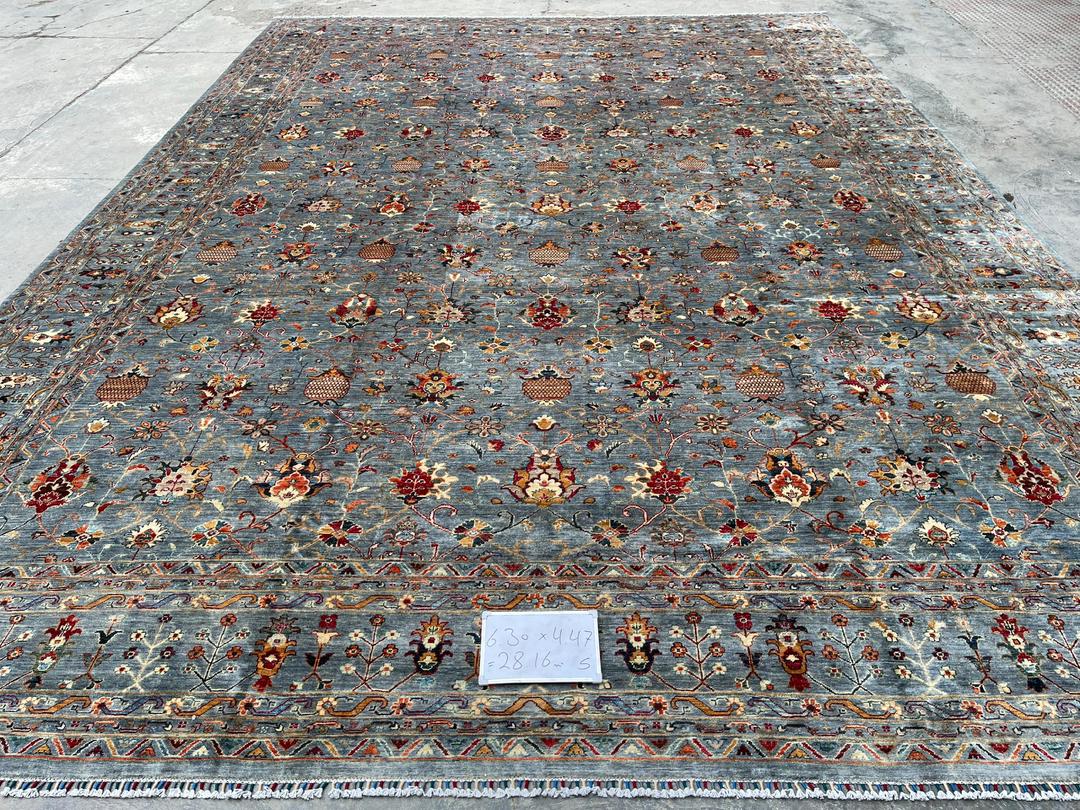
Hand-knotted. A weaver ties individual knots of wool around warp threads stretched on a vertical loom, row by row, and beats each row down before starting the next. The rug is the structure. There is no separate foundation glued on afterwards, because the knots and the warp and weft are the foundation. A 3 by 4 metre Afghan rug at typical Ghazni density contains somewhere between two and three million individual knots and takes a small team the better part of a year.
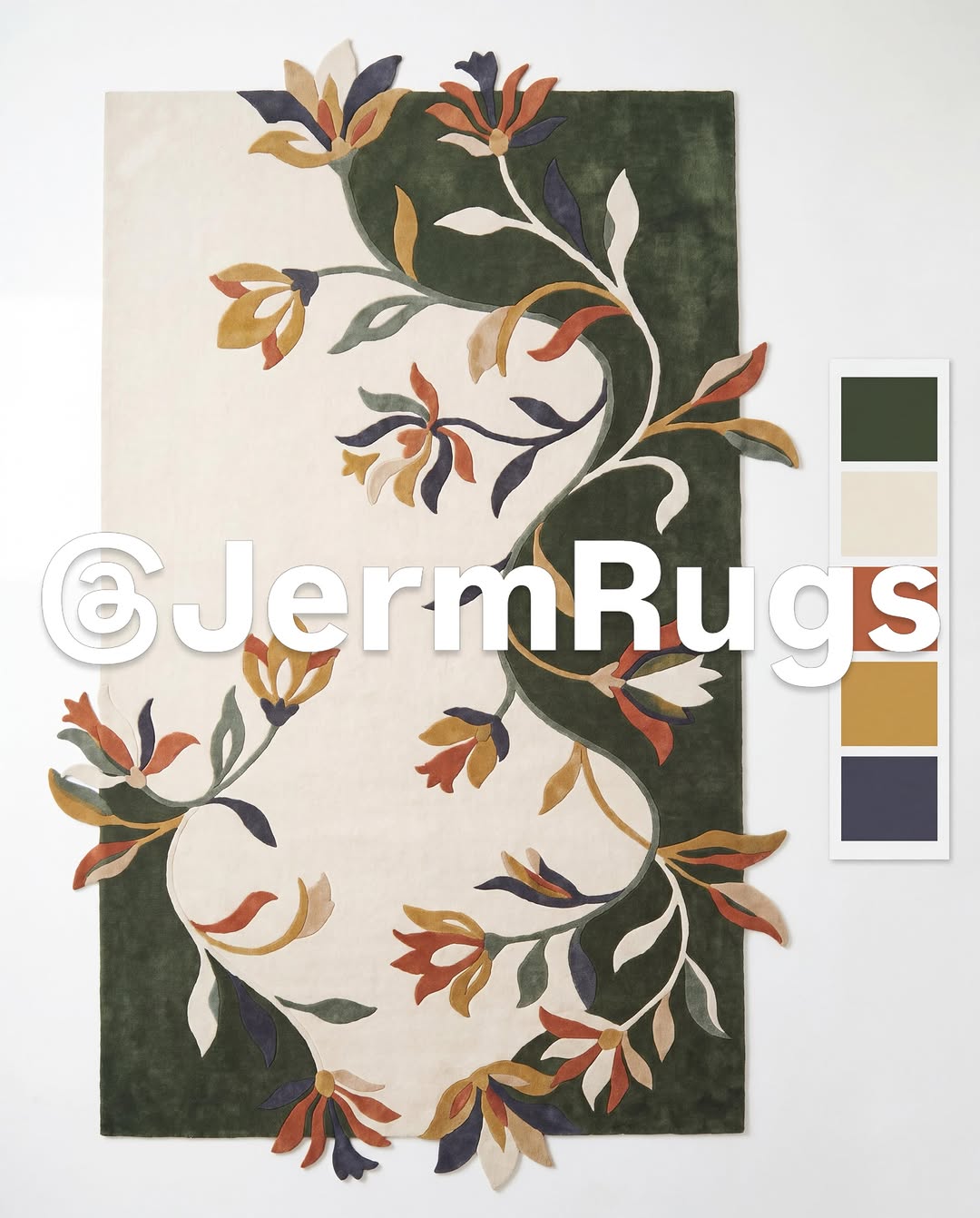
Hand-tufted. Wool is punched through a stretched canvas backing with a hand-held tufting gun, following a design drawn on the canvas. The loops are then sheared, the pile is carved along the design lines, and a latex layer plus a cotton backing cloth are applied to lock the tufts in place. A skilled tufter covers ground far faster than a knotter, which is the entire economic point.
The gun is powered, which is why some sellers call tufted rugs machine-made. They are not. Every line is placed by a person's hand and every carved edge is cut by eye. What is mechanised is the insertion of the yarn, not the making of the design.
The honest comparison
| Hand-tufted | Hand-knotted | |
|---|---|---|
| Price from | 500 SAR/m² | 1,100 SAR/m² |
| Lead time, custom | 65 to 75 days | 3 to 4 months, or 12 months+ for a new commission |
| Custom size and colour | Yes, exactly | In theory, rarely in practice |
| Realistic life, domestic use | 10 to 20 years | 50 years and beyond |
| Structure | Latex and backing cloth | Self-supporting weave |
| Design freedom | Very high, including carved relief | Bound by weave grid and tradition |
| Repairability | Limited | Very high |
| Resale value | None to speak of | Holds, sometimes appreciates |
| Shedding | Noticeable for 60 to 90 days | Minimal |
Where each one belongs
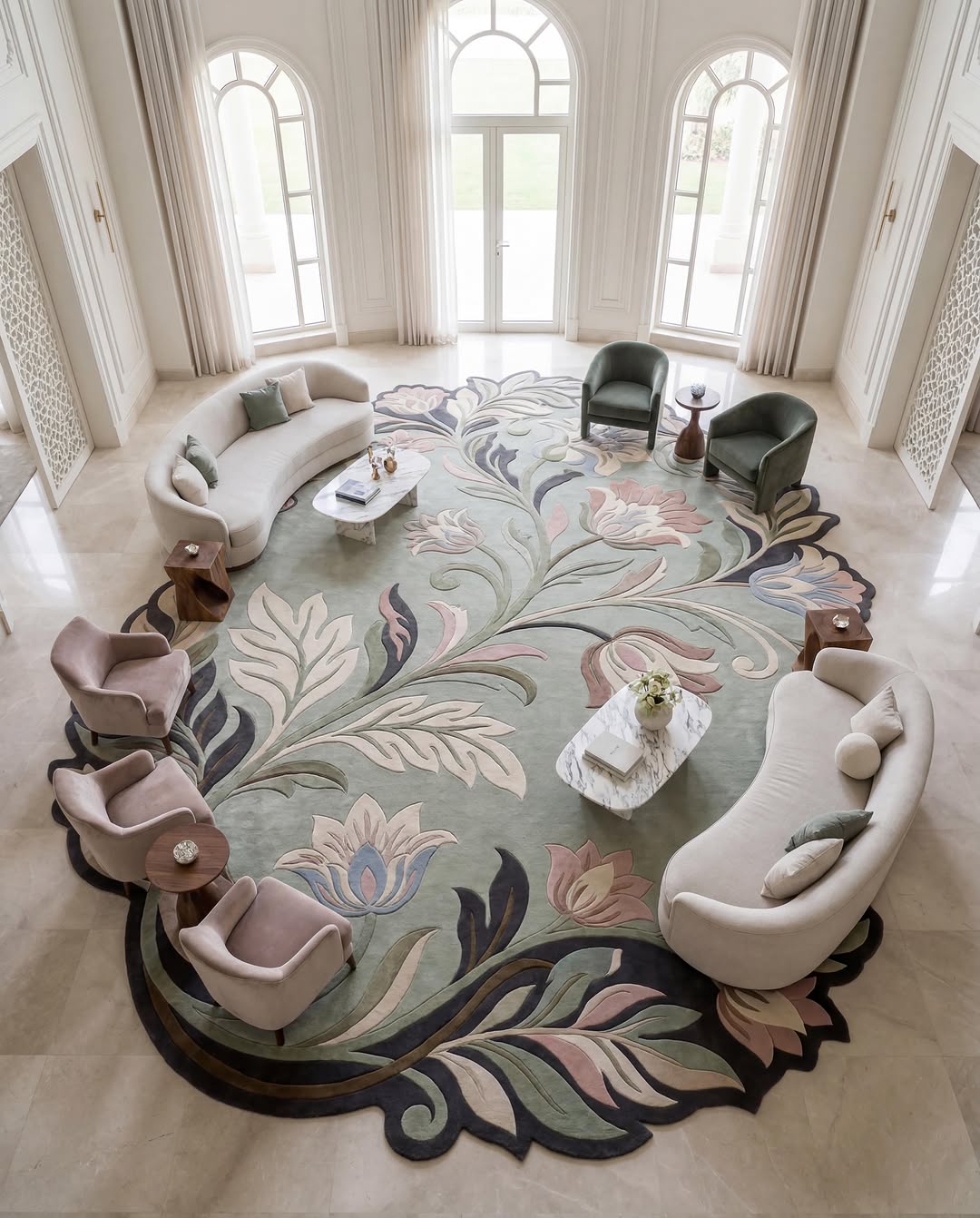
A large majlis, wall to wall, in a specific palette. Hand-tufted, without much hesitation. A 40 m² majlis in hand-knotted Afghan work is a 44,000 SAR floor with a long lead time and no ability to match the exact green in your upholstery. The same room in NZ wool hand-tufted is around 20,000 SAR, arrives in about ten weeks, and hits the palette precisely. The tufted rug is also the one that will actually look designed, because it is cut to the room.
A statement piece in a formal reception, on marble, meant to outlive the interior. Hand-knotted. If the rug is the object and the room was arranged around it, the weave matters and so does the resale floor under it.
Hotel suites and corridors. Hand-tufted, specified up. Contract environments need a defined pile weight, consistent repeats across many keys, and documentation. Hand-knotted cannot deliver forty identical rugs, by definition.
Anywhere the rug will be replaced within a decade for aesthetic reasons. Hand-tufted. Buying a fifty-year rug for a ten-year interior is a category error people make expensively and often.
The things people get wrong
“Tufted rugs fall apart.” Badly made ones do, and there are a lot of badly made ones. The failure point is always the latex. Cheap latex dries out, goes brittle, and the backing separates and powders, usually inside five years. Good latex with a proper cotton backing cloth, applied at the right thickness, does not do this. When you are comparing quotes, the difference between a 250 SAR/m² tufted rug and a 500 SAR/m² one is mostly wool quality and latex quality, and both are invisible in a photograph. Ask what the wool is and where it comes from. If nobody can tell you, that is the answer.
“Hand-knotted always means better wool.” It does not. It means a better structure. A hand-knotted rug in poor local wool will feel dry and mat down; a hand-tufted rug in New Zealand wool will stay springy and resist soiling. Highland wool, which is what New Zealand and Ghazni both are, carries more lanolin and a longer staple. That is where the resilience comes from, and it is independent of how the rug is built.
“You can carve a hand-knotted rug.” Some relief carving is done on knotted rugs, but it is limited and rarely convincing. The pronounced 6 mm carved channel that makes a modern arabesque read at scale, with a real shadow line along every curve, is a tufted technique. If your design depends on relief and shadow, tufting is not the compromise, it is the correct method.
How to tell them apart in thirty seconds
Turn the rug over.
A hand-knotted rug shows the design on the back, slightly softer than the front, with visible individual knots and a woven fringe that is a continuation of the warp, not sewn on. Fold it and the pile opens along a straight line down to the foundation.
A hand-tufted rug shows a plain cotton cloth on the back, with no design visible, stitched around the edge. Lift a corner of the binding and you will find the latex layer.
Neither of these tells you whether the rug is good. It only tells you what it is.
What we recommend most often
For Gulf villas, the majority of what we make and deliver is hand-tufted New Zealand wool, wall to wall, three to seven solid colours, carved. Not because it is cheaper, though it is, but because it is the only method that lets a 40 square metre floor be covered edge to edge in exactly the right colour with a design proportioned to that specific room.
Then, in the same house, we will often deliver one Afghan hand-knotted piece for the entrance or a study. The two are not competing. They are doing different jobs.
Frequently asked questions
Is hand-tufted the same as machine-made?
No. Machine-made rugs come off a power loom with no hand involvement in the individual rug. Hand-tufted rugs are made one at a time by a person operating a hand-held tool, following a drawn design, with the carving done by eye.
How long does a hand-tufted rug last in a majlis?
With New Zealand wool, proper latex and normal domestic use, ten to twenty years. Heavy daily traffic in a family sitting area sits at the lower end of that.
Can a hand-tufted rug be repaired?
Minor damage, yes. Burns, snags and edge damage are all fixable. Structural failure of the backing is not economically repairable, which is the real argument for buying good latex the first time.
Do hand-tufted rugs shed?
For the first two to three months, yes, and this is normal, not a fault. Loose fibres left over from shearing work their way out. Vacuum without a beater bar and it settles.
Why is your Afghan hand-knotted priced from 1,100 SAR/m² when I have seen higher?
Because we buy Ghazni wool pieces directly at source rather than through the wholesale layer. The rug is the same rug. The chain is shorter.

Written by Jerm Rugs

Leave a comment
This site is protected by hCaptcha and the hCaptcha Privacy Policy and Terms of Service apply.