
New Zealand Wool vs Viscose: What Each One Does in a Rug
Viscose is the most oversold material in the rug trade. It is sold as art silk, faux silk, banana silk, bamboo silk and half a dozen other names invented to avoid saying rayon, and it is put into fields of rugs that will be walked on daily by people who were never told what it does when it gets wet.
It also, used correctly, does something no wool can do. Both things are true.
New Zealand wool: why it is the default
New Zealand wool comes from highland sheep in a cold, wet climate. Three properties follow from that, and they are the reasons it costs more than Indian or Chinese domestic wool.
Long staple. Longer individual fibres mean fewer loose ends, which means less shedding and a surface that stays defined instead of fuzzing.
High lanolin. Natural wool grease that has not been stripped out gives the fibre a slight resistance to liquid and dirt. Spills sit on the surface for a moment before soaking, and that moment is often the whole difference.
High crimp and resilience. The fibre springs back. This is the single most important property in a majlis, where a heavy seat sits in one place for years. Wool with poor resilience takes a permanent compression mark; New Zealand wool mostly recovers.
It also takes dye cleanly and holds it, which matters when your palette is three to seven solid colours and any inconsistency across a 40 m² field is visible from the doorway.
Viscose and bamboo silk: what they are
Both are regenerated cellulose. Wood pulp, chemically dissolved and extruded into filament. Bamboo silk is viscose made from bamboo pulp, and it is a genuinely finer, more consistent filament than standard viscose, which is why we use it in the China tier and price it accordingly. But chemically it is the same family.
What it gives you is shine. Real, directional, changing-with-the-light shine that wool cannot produce. Run your hand across a viscose motif and the whole shape flips from light to dark. On an arabesque scroll or a leaf edge, that is a genuinely beautiful effect and it is the reason the material exists in rugs at all.
What it does badly
Water. This is the important one. Viscose loses most of its strength when wet and the fibre distorts permanently. A spilled glass of water on a viscose field leaves a yellowish stiff patch that does not come out. Not with cleaning, not with time. Professional cleaners in the Gulf will tell you the same thing and most will refuse to wet-clean a viscose rug at all.
Traffic. The filament crushes and does not recover. A viscose field in a walkway develops a shiny flattened track within a year.
Cleaning. It cannot be scrubbed. Rubbing a viscose fibre breaks it and the broken ends produce a permanently dull, fuzzy area.
So where does it belong
In motifs, on a wool ground, away from where feet land.
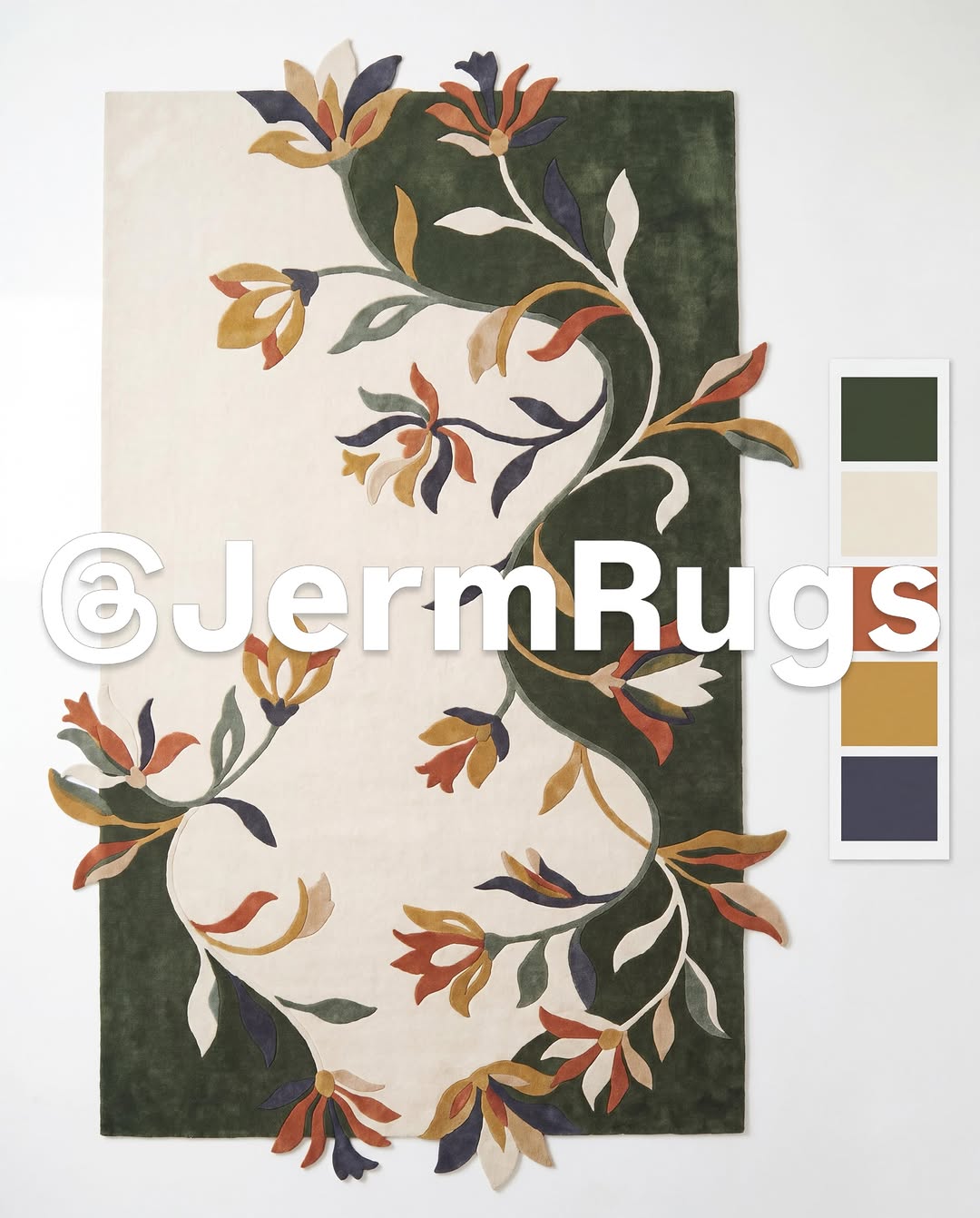
That is the entire correct use case. A scroll, a border detail, a leaf, a highlight along a carved channel. It catches light exactly where you want the eye to go, it occupies maybe five to fifteen percent of the surface, and it is surrounded by wool that is doing the structural work.
| Specification | Price |
|---|---|
| 100% NZ wool, India | 500 SAR/m² |
| NZ wool ground with viscose motifs, India | 600 SAR/m² |
| 100% NZ wool, China | 700 SAR/m² |
| NZ wool ground with bamboo silk motifs, China | 800 SAR/m² |
Note that there is no all-viscose option. That is deliberate. We are asked for it occasionally, usually by someone who has seen a photograph of a very shiny rug, and we say no and explain why. A rug we make is going to be photographed in a client's house in five years, and an all-viscose majlis will not survive that.
Wool blend percentages, plainly
When a seller says “wool blend” without a number, assume the worst. Common blends in the market run 70/30 wool to viscose and sometimes 50/50, which puts viscose across the whole field, including the traffic areas. That rug will look extraordinary in the showroom and tired in eighteen months.
Ask for the split and ask where the viscose sits. If the answer is that it is mixed evenly throughout, you have your answer about the rug.
The quick test
Take a single fibre from a sample, if you can, and hold a flame to it briefly.
- Wool: smells like burning hair, self-extinguishes, leaves a crushable black bead
- Viscose: smells like burning paper, burns fast and continues, leaves fine grey ash
Do this on a sample, never on a rug you own.
What we recommend
For a majlis, a villa hall, anything with daily use: 100% New Zealand wool. If the design calls for light-catching detail, add viscose or bamboo silk in the motifs only, which is our 600 and 800 SAR/m² tiers.
For hotel corridors and any contract environment: 100% wool, higher pile weight, no exceptions. Contract specification usually has fire testing requirements that viscose complicates anyway.
For a bedroom or a formal reception that sees light use and where the rug is a display object more than a floor: viscose content can go higher, and the effect can be spectacular. Just decide that with open eyes.
Frequently asked questions
Is bamboo silk real silk?
No. It is viscose made from bamboo pulp. It is finer and more consistent than standard viscose, which is why it costs more, but it behaves the same way with water and traffic. Real silk is a protein fibre from silkworms and is a different material entirely.
Can a viscose stain be removed?
Water marking on viscose is usually permanent because the fibre itself has distorted, not just discoloured. This is why we keep viscose out of the field and in the motifs.
Does New Zealand wool shed?
For the first two to three months, mildly. Long staple means less shedding than most wools, but a new hand-tufted rug always releases loose fibre left from shearing. Vacuum with the beater bar off.
Why is Chinese production more expensive than Indian when the wool is the same?
The wool is the same New Zealand wool. The difference is finishing tolerance: tighter carving lines, more even pile height across a large field. On a big single-colour ground it is visible. On a busy pattern it is much less so, and the Indian tier is the better value.
Is wool hot for a Gulf climate?
No. Wool regulates rather than insulates in one direction, and it sits under air conditioning in every home we deliver to. It is also more comfortable underfoot on marble than any synthetic.

من قِبل Jerm Rugs

اترك تعليقًا
This site is protected by hCaptcha and the hCaptcha Privacy Policy and Terms of Service apply.